 Belgium, to put it simply, is one of those accidents of history. Coming into existence only in 1830 (which makes it young by European standards), Belgium was before that briefly ruled by the Netherlands; but for most of the previous 400 years before independence, rule of Belgium was passed between Spain and Austria (don't ask me how two nations that are not even close to Belgium ended up ruling it) with France often invading trying to take it over. Before that, what is today Belgium was in the Middle Ages a collection of free towns and feudal domains that was a part of that great anomaly of history, the Holy Roman Empire (and if you want to go really far back, what is today Belgium was part of the Roman Empire, as the province of Belgica, from which the name Belgium comes from).
When Belgium became an independent state in 1830, it did not have (and still does not have) a unifying language, ethnic group, or culture. In religion, it was a bit more unified with it being about 75% Catholic and 25% Protestant (the figures remain the same today, except the churches in present day Belgium are mostly empty on Sundays). The result of this is since independence, Belgium has been a strange political marriage between two ethnic groups, the Flemings and the Walloons. The Flemings live in the North and speak their own version of Dutch while the Walloons live in the South and speak their own version of French.
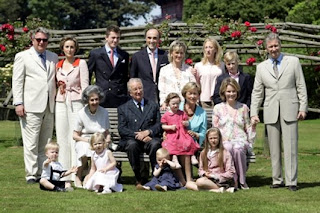
This family you see above is one of only three things that unites Belgium, the other two are its national soccer team (like the rest of Europe, Belgians are soccer mad) and its famous beer.
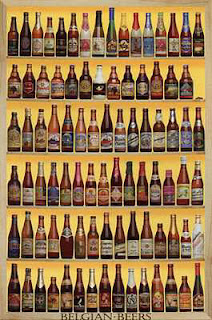 If there is one thing Belgians really take pride in, its their beer. Without a doubt the best beer on the planet, Belgian beer is the result of centuries of perfection. Many of the brands of Belgian beer sold today, Hoegaarden, Stella Artois, Leffe, Dubbel and others are based on recipes going back to the Middle Ages (the recipe for Leffe actually goes back to the late 1100's). These beers and other Belgian beers has a quality that has such a richness in taste that few other beers can even come close to. Yes, it does take a little getting used to, but if you open your palate to the symphony of flavor that is the pride of Belgium, you too will soon be wondering how did you ever drink that standard watery crap that the FDA somehow allows to be called beer.
Of course in the world of Belgian beer, nothing beats Trappist Beer. Today, the Order of Cistercians of the Strict Observance, commonly referred to as the Trappists, allows only eight of their monasteries to market the beer they brew. Six of them are in Belgium and these six produce what is without a doubt the best beer brewed on Earth. In the United States Chimay is usually the easiest to get. Compared to the sewer water that you drank in high school and college, it is a bit expensive, but its worth every penny.
Now here is the best part. The Trappists (no way am I going to keep writing their formal name), follow the Rule of St Benedict (St Benedict was an Italian monk from the sixth century). In the Rule, St Benedict told generations of future monks that hard work is important as a service to God, and today the Trappists take it as the way to live. While most Belgian beer today is brewed in standard breweries, only using recipes that monks came up with 500-800 years ago, Trappist beer is still brewed in the monasteries by the monks themselves with little outside help. And all profits are used for the upkeep of the monasteries and the rest going to charities around the world. So next time you want to have a real beer and help out the unfortunate of the world, have a glass of Trappist beer.
So I'm sure you thinking, the nation that produces that most incredibly awesome beer brewed in the universe must be a happy nation. Well, unfortunately, no. Belgium is one of the most divided nations in Europe, divided into three different regions with two main ethnic groups. In the north is Flanders. Home to about 60% of the population, this Dutch speaking region is one of Europe's wealthiest regions, with its population having a better lifestyle than most Americans. In the south is Wallonia. Home to about 30% of Belgium's population. In this French speaking region, things aren't so great. In the 19th century, Wallonia was home of one of mainland Europe's most industrialized regions, but in the mid 20th century, the region became a rustbelt, very similar to the American Mid West, though lately it has been making a rebound. And then there is the last region of Belgium, home of the final 10% of the population, Brussels. Brussels, a French speaking (though officially bi-lingual) city in the Dutch speaking region, is one of the most modern and cosmopolitan cities in Europe today. Headquarters of the EU, home of many international corporations, and with a large multi ethnic population of professionals from around Europe as well as a vibrant community of African immigrants, Brussels is a city that many nations would love to have.
Since independence in 1830, the Flemings and the Walloons have been in a continual power play of give and take with power being balanced between the national government in Brussels and the two regional governments. In the 19th century, the Walloons, being more wealthy, dominated the national government, but allowed the Flemings to decide local policy in their region. In the 20th century (in which Belgium was overrun twice by Germany, in both WWI and WWII), the Flemings took over (and most of the prime ministers since have been Flemings), but in the process gave up more local power in order to please the Walloons. By 1990, Belgium had the distinction of being Europe's most divided nation - that's right even more divided than Northern Ireland and Bosnia.The Flemings and the Walloons almost never interact. In Northern Ireland, Catholics and Protestants (who have been shooting at each other for the past 300 years) have more interaction. In Bosnia, Serbs and Muslims (remember, just a decade ago they were slaughtering each other) have more interaction. Even Belgian politics reflected this division. Unlike most nations which usually has two or three main political parties, Belgium has a large collection of regional parties. In Flanders there are eight major political parties and in Wallonia there are five major political parties as well as a bunch of other minor parties. Belgium is one of those nations where you can have members of three or four or even five parties running the show. The result of this is Belgian governments are always a bizarre coalition of several parties, each one always trying to get a larger piece of the pie. Even Belgian media is divided, the TV and radio networks in Belgium are all localized.
So now comes the fun part of our account, the Elections of 2007.
In June 2007, Belgians went to the polls for what should had been routine (by Belgian standards) elections. Since 1999, the prime minister of Belgium was this man: Guy Verhofstadt
.jpg) By the way, this was most flattering picture I could find of Mr. Verhofstadt.
By the way, this was most flattering picture I could find of Mr. Verhofstadt.
From what I've gathered, it appears Verhofstadt ran Belgium in a Clintonesque centrist way, but without the scandals. After eight years in power, Belgian voters in both regions were tired with his coalition and the two main partners of his coalition, the VLD (Dutch speaking) and the Socialists (French speaking) suffered a huge set back at the polls - the VLD (a center left party) actually came in forth behind the far right Flemish Interests Party. The winners of the election were the CDV (Dutch speaking) and the Reform Movement (French speaking). Verhofstadt resigned as prime minister, and under Belgian law, King Albert named Verhofstadt head of the caretaker government while a new government was to form.
The honor of forming the new government as well as the prime ministership would go to this man, the head of the CDV, Yves Leterme
.jpg)
Now under normal circumstances, after a few weeks, a coalition between the CDV and Reform Movement (and perhaps one or two smaller parties) would had been established and Leterme would take over. Unfortunately, this time around, it didn't happen. Leterme had ran on a "give more power to the local regions" platform and Flemish voters voted for it in huge numbers. In Wallonia, both the Socialists and the Reform Movement both had a "more power to the national government" platform, and the Walloons voted for this in large numbers. The result of this platform split was deadlock occurred in the collation talks between the CDV and Reform Movement and other parties over how much power would go to Brussels and how much would go to the regions.
The deadlock continued for weeks
Then months
And into 2008
As of this was going on, a collective sense of embarrassment began to emerge in all three regions of Belgium. Belgians began to look at their nation and how divided it was and as the months dragged on without a government, the talk of a possible divorce of Belgium in the style of Czechoslovakia began to get louder. Suddenly, what had previously been laughed at was now being seriously discussed as a possible solution to the problem. Also, Guy Verhofstadt was still running the caretaker government, which under Belgian law really couldn't do anything. Even King Albert got involved, personally having the leaders of the main parties over at his estate for private closed door talks.
As of this went on, the rest of Europe watched very nervously. As the EU continues to gain more power, slowly turing Europe into a single Federated State, many EU supporters realized that if Belgium couldn't last after 180 years in existence, what chances does the EU have of turing Europe into a single state?
Finally in March of 2008, Leterme finally broke through and a government was finally formed. The new government included a large number of parties including the CDV, the Socialists, as well as nationalists parties from both regions. Though the government included parties from every part of the political spectrum, Belgians all across the region breathed a sign of relief as a new government led by Leterme was sworn in another round of elections would occur until 2011.
Then on July 14, Yves Leterme offered his resignation to King Albert. When Leterme was sworn in back in March, he vowed to get all enact his platform by July 15, and when July came and no power had been transferred to the regions (due to the French speaking parties blocking constitutional reform), Leterme announced his resignation. Belgians across the nation screamed in horror as another election could be in the near future. King Albert refused the resignation and asked Leterme to form a committee to try to solve the transfer of power problem. The committee is to report to the King on July 31. Meanwhile, a plan to redraw the electoral districts in Brussels is angering the people of Brussels because they are convinced its designed to give more power to the Flemish speakers. Things aren't looking so good for Belgium.
So what's in store in Belgium's future? No one knows, Belgium is already becoming the new Italy, with governments not lasting long and long disputed elections. Will Belgium split up? Will Belgium become a nation that exist in name only with all power belong to the regions? Or perhaps the French speaking parties could get their way and more power will go back to Brussels. Stay tune for what happens next.


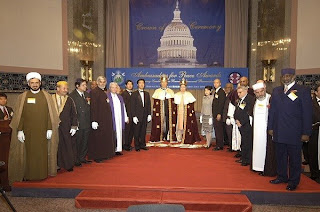

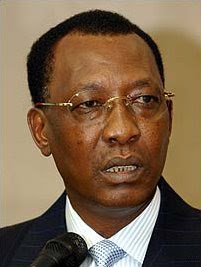 Deby (a native of the Sahara region in the north) got his start in the Chadian army in the 1970's when his intelligence was recognized and he was sent to France for training and study. After returning, he teamed up with Hissene Harbe, a former rebel leader who overthrew the government and became president in 1982. During the Harbe years (which saw over 40,000 political killings), Deby rose to the top of the military but in 1989 a rift between the two occurred and Deby fled to Sudan. A year later he returned with a rebel group of his own (financed by Sudan and - according to some human rights groups - France). Harbe, very unpopular, fled and in November Deby marched into the capital N'Djamena and declared himself president.
 Since coming to power in 1990, Deby has become one of the most corrupt presidents on the planet. As president, Deby has openly favored his ethnic group, the Zagawa, a small group which is one of the smallest in Chad with less than 3% of the population (it doesn't even make the top 9). While Chadians have long been used to Presidents favoring their own, Deby has turned this into an art form, putting almost all his relatives - both close and distant - into all the top jobs. On a day to day basis, corruption has reached epic proportions, with bribe being needed to get about anything done, and if you're a subsistence farmer or herder (in case you forgot they make up 80% of the population), the government has done nothing for you except take men away for the army and take part of the harvest to feed the army.

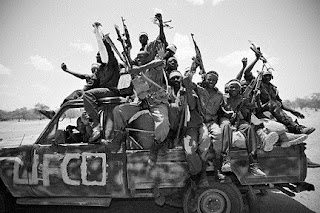
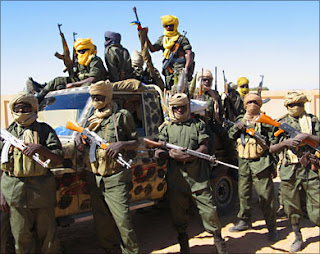

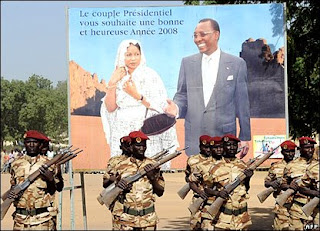

 Meanwhile while all of this was going on, members of a French charity were arrested for being involved in a scam that stole children from their parents and send them to Europe and the US as orphans up for adoption. Needless to say, the case became huge not just in Chad, but in the rest of Africa and in Europe as well (of course the US media was too busy reporting on the latest celebrity gossip to notice this story).

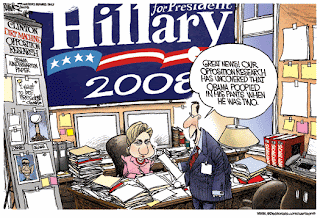
 Back in 2006, when everyone assumed Hillary was going to be the nominee, alot of people talked about having Obama, the rising star of the party, as her VP, uniting the various factions of the Democratic Party under a dream team which would win the White House in a landslide. Now, if it is going to happen, it will be the reverse and it will only be to keep the party from imploding. However, if Hillary really wants it, she will have it because of the leverage she has from coming in a close second, and with many of her followers screaming that they will never vote for Obama, it may be the only way to keep mass defections of older white women and Mid Western blue collar workers, both groups who are critical to winning the White House this fall. The question, however, should be does Hillary really want to be Vice President Hillary? Remember, the constitution gives the Vice President only two jobs: to break ties in the Senate, and to take over if something happens to the President. And after eight years of Satan (sorry, I mean Dick Cheney, I'm always confusing the two), the most powerful VP in US history, most Americans want a more traditional Vice President who goes on Jay Leno and make goodwill trips to nations most people never heard of. There are many more jobs that Hillary can get that have real power. If Hillary does not take the VP nomination, but goes out and campaigns hard for Obama, watch her get some other position should he be elected. Perhaps Justice Hillary on the Supreme Court, or Secretary (fill in the gap) Hillary in the Cabinet, or Governor Hillary of New York, or maybe Ambassador Hillary to the UN. However, don't forget the 800 pound gorilla in the closet, Bill Clinton.
 Governor of Kansas since 2003, Sebelius is a popular Democrat in one of the most Republican states in the nation (remember, Kansas is the state where they tried to take science out of the classroom). While she could never get elected in a liberal state like Vermont or Oregon, Sebelius, a practicing Catholic, is the type of Democrat who can win in the more conservative parts of the US. That does not mean she is a DINO (Democrat In Name Only). She is in favor of reproduction rights, is opposed to the death penalty, and has stood up to the gun lobby. Though she had originally won due to a split in the Kansas Republican Party, she has now become one of the most respected and popular governors in recent history.
 Governor of New Mexico since 2003, Richardson has the perfect resume to balance the newcomer Obama. Richardson got his start in the 1980's when he was a congressman representing New Mexico's 3rd district. Later on during the Clinton years, he went to work for them first as Ambassador to the UN and later in the Cabinet as Secretary of Energy. As governor, Richardson has been a major supporter of decriminalization of marijuana and a die hard supporter for rights of homosexuals. However, he is also a supporter of rights of gun owners, and has supported business friendly tax laws that most Democrats would never support. And, despite his gringo name, 3 out of 4 of Richardson's grandparents were Mexican (his parental grandfather, who he was named after, was the only American in the family). Richardson's mother, Maria Luisa Lopez Collada Marquez, only moved to the US when she was pregnant with Bill. After a couple of years in the US she brought her family back to Mexico and Richardson spent his childhood in Mexico City before moving back to the US for good. As such, Richardson, who grew up speaking Spanish, considers himself to the a Latino and is well known and very popular in the Hispanic community.
 Senator from Delaware since 1973, Biden has a resume that also balances Obama's through his long term service on two of the most powerful committees in the Senate: The Judiciary Committee and the Foreign Affairs Committee. Biden was a strong supporter of the Iraq War in the beginning, but has now been very vocal in calling for a change in policy that's neither total withdrawal nor stay the course. Also, Biden has been a vocal supporter on making higher education easier for poorer families.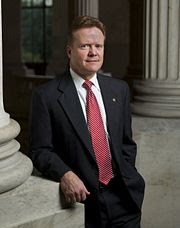
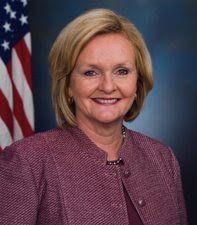
 And on the list of names from which our probable next VP will be from.
 Former governor of Massachusetts, Mitt Romney made flip flopping an art form when he realized being governor of the most liberal state in the union wasn't going to win many votes among the rank and file Republicans outside of the Northeast (just Google "Mitt Romney, flip flop"). Thanks to the Republican winner-take-all primary system, Romney was out of the primary after Super Tuesday, thus sparing the Republican Party the agony that has is known as Barack vs Hillary.
 Current governor of Florida, Crist is currently a member of that threatened species, Republicanus populus, the popular Republican. Even Florida Democrats have a grudging respect for this man. Though Crist got his start as Attorney General of Florida back when it was being run by George's Bush's brother Jeb, he has never been close to the Bushes, which has only helped his popularity. And while as governor Crist has been very supportive to the gun lobby, as well as being tough on illegal immigration, Crist has also won praise from many for his pro environmental views (his record is actually better than some Democrats) as well as his aggressive drive to recruit legal immigrants to settle in Florida.
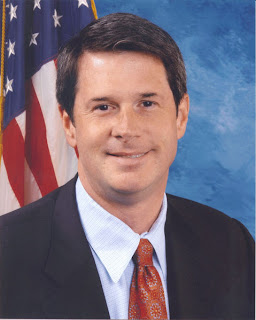
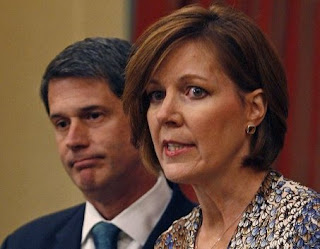 Now what makes this even funnier is back in 1999 when Vitter was running for congress for the first time (and don't forget when he was also a regular of the women in the employ of the Canal Street Madam), Wendy Vitter had publicly stated if she ever caught her husband cheating, she would simply castrate him. But what does Mrs Vitter do? She simply stated that it was a private matter that was settled a couple of years ago and then went after the media for making a big deal out it (after all, when your whole political carrier was built on defending Biblical values and "saving marriage" you have every right to privacy when you're found out to be a lying hypocrite). The Vitters then left without answering any questions. As of the writing of this issue, there is still no word on the status of Senator Vitter's penis.


 So what do you do when almost 20 percent of your population is stranded in transit stations, angry at how they're spending their one time off of the year? Well President Hu and his crew knew that even the image of doing something was better than doing nothing. Primer Wen was quickly dispatched to the hardest hit areas and even Hu himself toured other areas and made sure to be seen on tv trying to fix the situation. Eventually, the crisis faded away as people started trickling home (in case you're wondering if these stranded workers got any extra time off - well I looked around on the Internet and - scary to say - could not find an answer).
.jpg)

 Never heard of Xinjiang? Well don't be surprised, few have heard of the single largest region of China, Xinjiang, which makes up China's northwest. Xinjiang makes up one sixth of China's land mass, and historically was inhabited by the Urghurs, a people who are related to the Turkic peoples of Central Asia. Just like their cousins in the Central Asian republics, the Urghurs (by the way, I've found about four different spellings for Urghur) are Muslims and had their own colorful culture, even after centuries of Chinese rule. The Chinese emperors allowed to Urghurs to live their own lives as long as they paid their taxes and knew who was in charge. That all changed in 1949, with the coming to power of the Communist Party. Before long however, the Chinese government encouraged poorer Han Chinese to move to Xinjiang, and now over 40 percent of the permanent population is Han Chinese, and this does not include the migrant laborers who head there every year, as well as the normal group of bureaucrats, Communist Party officials, and military personnel. The Urghurs have watched their land and culture being destroyed, a process that has accelerated since the 1990's. Just like their Tibetan neighbors to the south, the Urghurs have protested to Chinese rule, but with part of Xinjiang bordering Afghanistan and Pakistan, the Chinese government has repeatedly stated that these anti government groups are really fronts for Islamic terrorists. Whenever an Urghur is discovered in a terrorist camp (which isn't that often), the Chinese government gleefully declares it proof of a large scale Taliban/Al Quada conspiracy to end Chinese rule of Xinjiang. Since 2001, the Chinese government has used the US "War on Terror" to crackdown on all pro Urghur movements in Xinjiang, even those that are content with Chinese rule and only want the Urghurs to be treated better. Amnesty International reports that Xinjiang is the only part of China where political executions are still commonplace.


